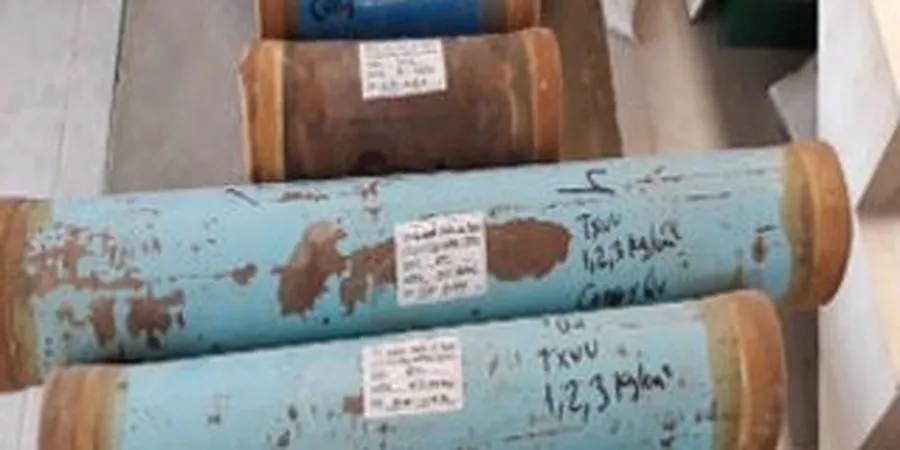
A high-rise development near Calgary's Bow River required undisturbed soil samples to evaluate foundation settlement in the alluvial deposits. The site's saturated silts and clays demanded tube sampling instead of Standard Penetration Testing. Shelby tubes extract an intact core, preserving the soil's natural structure and moisture content. This method is critical when lab tests like consolidation and triaxial shear must reflect true in-situ behavior. Without it, design parameters for the raft foundation would have been speculative. Our team deployed thin-walled stainless steel tubes following ASTM D1587 to capture samples from 5 to 18 meters depth. The project moved forward with reliable data, avoiding costly overdesign.
A Shelby tube sample preserves the soil's natural skeleton and pore water — essential for reliable consolidation and strength tests on Calgary clays.
Methodology and scope
A common mistake among Calgary builders is assuming that disturbed samples from SPT suffice for settlement and strength analysis. They do not. Undisturbed sampling via Shelby tube provides intact specimens for advanced laboratory testing. This is especially important in Calgary's glaciolacustrine clays, which can be sensitive to disturbance. The procedure uses a stationary piston or push tube advanced hydraulically at a constant rate. Before tube sampling, we always run test pits to log stratigraphy and select the correct tube diameter. Key aspects of the technique include:
Thin-walled tubes (1.5–3.0 mm wall thickness) to minimize friction
Area ratio below 10% to reduce soil displacement
Immediate wax sealing and vertical storage to prevent moisture loss
Transport in padded containers to avoid vibration disturbance
The result? Samples that truly represent the in-situ density, fabric, and saturation.
Technical reference image — Calgary
Local considerations
Downtown Calgary's dense clay till contrasts sharply with the soft lacustrine deposits near Glenmore Reservoir. In the till, undisturbed sampling is straightforward — samples are stiff and hold shape. But in the reservoir area, the high-plasticity clay can squeeze and crack during extrusion if the tube is not carefully handled. The biggest risk is sample disturbance: a poorly collected Shelby tube sample can show 30% lower strength than the true value. That leads to overconservative foundations or, worse, unsafe designs. Our field crew in Calgary uses strict handling protocols, from slow retraction to immediate wax coating, to keep the sample intact.
Thin-walled tube sampling using hydraulic push or stationary piston. Strict adherence to ASTM D1587. We handle depths up to 25 m in cohesive soils. Samples are sealed, labeled, and transported to our Calgary lab within 24 hours.
02
Laboratory Testing on Undisturbed Samples
Consolidation, triaxial, and direct shear testing on intact specimens. All tests performed in our ISO 17025-accredited lab. Results include stress-strain curves, preconsolidation pressure, and undrained shear strength.
Applicable standards
ASTM D1587-15 (Standard Practice for Thin-Walled Tube Sampling), NBCC 2020 (National Building Code of Canada — foundation design), CSA A23.3-19 (Design of Concrete Structures — soil parameters input)
Frequently asked questions
What is the difference between undisturbed and disturbed soil sampling?
Undisturbed sampling using a Shelby tube preserves the soil's natural structure, density, and moisture content. Disturbed sampling (e.g., SPT split-spoon) breaks down the soil fabric. Only undisturbed samples can be used for consolidation, triaxial, or direct shear tests where in-situ behavior matters.
How deep can Shelby tube sampling reach in Calgary soils?
In cohesive soils like Calgary's clay till, we typically reach 15 to 20 meters. In softer lacustrine clays, depths up to 25 m are possible. The limit depends on soil stiffness and tube wall strength. Below that, soil may plug the tube or the tube may buckle.
What is the price range for undisturbed sampling in Calgary?
The cost ranges between CA$590 and CA$1,530 per sample, depending on depth, access conditions, and number of samples. Volume discounts apply for multi-sample projects. Contact us for a site-specific quote.
How long does it take to get results after sampling?
Field sampling takes one to two days for a typical project. Laboratory testing on the undisturbed samples takes an additional 7 to 14 business days. Consolidation tests require more time due to incremental loading stages.