← Home · Ground improvement

Geotextile Specification for Calgary Construction Projects

Together, we solve the challenges of tomorrow.

LEARN MORE →

Geotextile specification in Calgary starts with the Canadian Foundation Engineering Manual and ASTM D4439-20. Calgary’s freeze-thaw cycles and expansive clay till demand careful geotextile selection for filtration, separation, or reinforcement. The right geotextile prevents soil mixing under roads and protects drainage layers from clogging. Before specifying the geotextile class, a proper soil classification helps match the apparent opening size (AOS) to the site’s particle distribution. This ensures long-term performance in Calgary’s variable ground conditions.
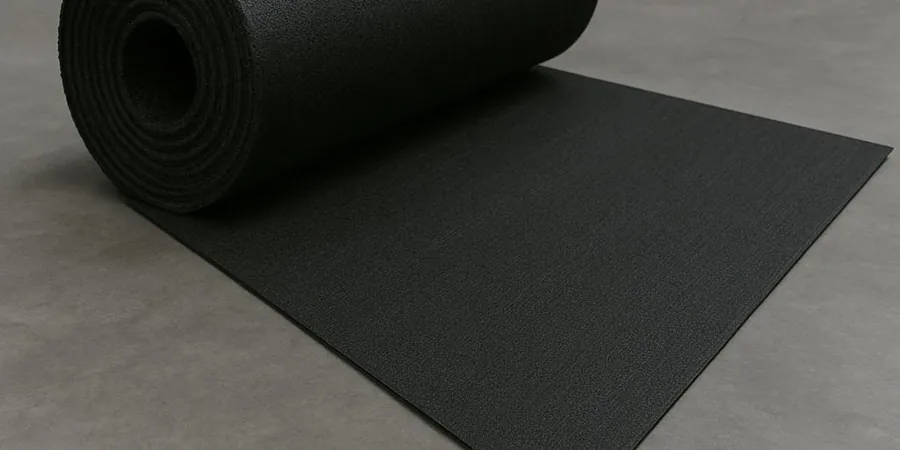
Illustrative image of Geotextiles in Calgary
Calgary’s glacial till and freeze-thaw cycles demand geotextile specifications that balance filtration, strength, and UV resistance for long-term performance.

Methodology and scope

Calgary sits at 1,045 m above sea level, with a semi-arid climate and over 100 freeze-thaw cycles per year. Geotextile specification must account for UV exposure during installation and the high plasticity of local glacial till. The geotextile tensile strength, permittivity, and puncture resistance are selected based on the specific function — nonwoven geotextiles for drainage and filtration, woven for reinforcement. Each project requires a geotextile specification that matches the subgrade California Bearing Ratio (CBR) and the long-term design life under repeated loading.
Technical reference image — Calgary

Local considerations

A poorly specified geotextile in Calgary can lead to clogging or tearing during installation. The main risk is selecting a geotextile with an AOS too fine for the site’s soil — it clogs and turns into a barrier instead of a filter. Another common failure is using a nonwoven geotextile where high tensile strength is needed, such as under heavy haul roads. The geotextile specification must also consider the subgrade moisture conditions during Calgary’s wet spring and fall seasons to avoid installation damage.

Need a geotechnical assessment?

Reply within 24h.

Email: contact@geotechnicalengineering.xyz

Technical parameters

ParameterTypical value
Apparent Opening Size (AOS)0.15 – 0.85 mm (per ASTM D4751)
Grab Tensile Strength400 – 1,800 N (per ASTM D4632)
Permittivity0.05 – 2.5 s⁻¹ (per ASTM D4491)
Puncture Resistance (CBR)1,000 – 6,000 N (per ASTM D6241)
UV Resistance (retained strength after 500 h)≥ 70% (per ASTM D4355)

Associated technical services

01

Material Selection & Specification Writing

We review the project drawings, subgrade conditions, and drainage requirements to write a geotextile specification that matches the intended function — separation, filtration, drainage, or reinforcement.

02

Geotextile Performance Testing

Our lab tests geotextile samples for tensile strength, permittivity, puncture resistance, and UV degradation per ASTM standards to verify compliance with the specification.

03

On-Site Installation Inspection

We inspect the geotextile placement, overlap, anchoring, and cover to ensure the installation matches the specification and avoids damage during the construction phase.

Applicable standards

ASTM D4439-20 (Standard Terminology for Geosynthetics), ASTM D4751 (Apparent Opening Size), ASTM D4491 (Permittivity and Flow Rate), ASTM D4632 (Grab Tensile Strength), ASTM D6241 (CBR Puncture Resistance)

Frequently asked questions

What is the typical cost for a geotextile specification service in Calgary?

The cost ranges between CA$630 and CA$1,460 depending on project complexity, number of geotextile functions, and the need for lab testing. Pricing varies with volume and site access.

How do I choose between woven and nonwoven geotextile for my Calgary project?

Woven geotextiles are specified for reinforcement and separation under high loads — they have higher tensile strength. Nonwoven geotextiles are used for filtration and drainage because they have higher permittivity and allow water to pass while retaining soil particles. The choice depends on the subgrade CBR and the design function.

Does Calgary's clay till affect the geotextile specification?

Yes, Calgary's glacial till has high fines content and plasticity, which can cause clogging if the geotextile's apparent opening size is too small. The specification must match the AOS to the soil's D85 (the particle size at which 85% of the soil is finer) to ensure long-term drainage performance.

Location and service area

We serve projects across Calgary.

Location and service area