← Home · Ground improvement

Grouting design in Calgary – engineered solutions for soil stabilization

Together, we solve the challenges of tomorrow.

LEARN MORE →

Calgary grew fast after the 1947 Leduc oil discovery, but its geotechnical reality is shaped by glacial till, alluvial sands, and the Bow River floodplain. Those deposits vary sharply across neighborhoods, so grouting design must start with a clear picture of the subsurface. We map permeability zones and void networks before recommending injection pressures or mix ratios. For projects near the river, a permeability field test helps define grout take before mobilization. Every program we design matches the actual ground conditions, not a textbook average.
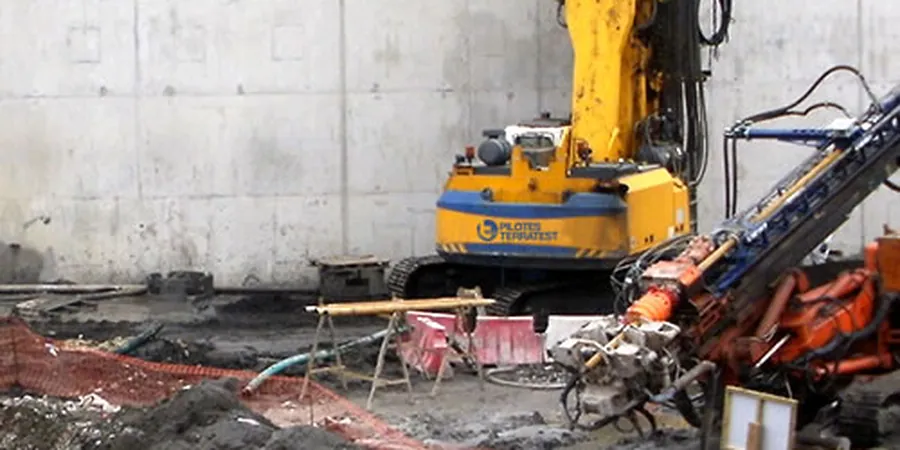
Illustrative image of Grouting in Calgary
Glacial till in Calgary hides silt lenses that behave like drains — grouting design must track those paths to avoid waste.

Methodology and scope

Calgary sits at 1,045 m above sea level, and the glacial till here can hide lenses of silt and sand that behave like drains. Grouting design in this setting has to account for those preferential flow paths. We run water pressure tests (Lugeon) at 1.5 m intervals to characterize fracture apertures and estimate grout spread. The data feeds directly into the mix design — cementitious, chemical, or resin — depending on target strength and viscosity. A consolidation test on undisturbed samples also tells us how much the ground will settle after treatment. Our lab follows CSA A23.1 and ASTM C1091 for grout sample preparation and testing.
Technical reference image — Calgary

Local considerations

Calgary’s freeze-thaw cycles and high water table in spring create real risk: grout injected in winter may crack if the mix isn’t designed for thermal shrinkage. We adjust the water-cement ratio and add plasticizers to reduce bleeding and heat of hydration. On the flip side, summer storms can saturate the till quickly, changing pore pressures mid-injection. We monitor return flows and adjust pressure in real time. The goal is a continuous, sealed mass — not isolated pockets of grout.

Need a geotechnical assessment?

Reply within 24h.

Email: contact@geotechnicalengineering.xyz

Technical parameters

ParameterTypical value
Permeability range (m/s)1×10⁻⁶ to 1×10⁻⁴
Injection pressure (bar)2 – 15
Water-cement ratio (by mass)0.6:1 to 2:1
Lugeon value (UL)1 – 100
Grout take (liters per meter)20 – 300
Target shear strength (kPa)50 – 200

Associated technical services

01

Permeability profiling

Lugeon and falling-head tests at multiple depths to map flow paths and estimate grout volume.

02

Mix design & testing

Laboratory trials on cementitious, chemical, and resin grouts to match target strength and viscosity.

03

Injection pressure analysis

Finite-element modeling of fracture networks to set safe and effective injection pressures.

04

Post-grout verification

Core drilling, pressure tests, and cross-hole sonic logging to confirm grout continuity.

Applicable standards

CSA Z768 – Standard Practice for Design and Installation of Groundwater Monitoring Wells, CSA A23.1 – Concrete Materials and Methods of Concrete Construction, ASCE Grouting Committee Guidelines

Frequently asked questions

How does Calgary's glacial till affect grouting design?

Glacial till in Calgary contains irregular silt and sand lenses that create preferential flow paths. Grouting design must map these with permeability tests and adjust injection pressure to avoid losing grout into unwanted zones.

What is the typical cost range for a grouting design study in Calgary?

A full grouting design program in Calgary typically ranges between CA$1,500 and CA$6,100 depending on site complexity, number of injection points, and laboratory testing.

What standards apply to grouting design in Alberta?

We follow CSA Z768 for well installation, CSA A23.1 for concrete-based grouts, and the ASCE Grouting Committee guidelines for injection procedures. Local Alberta building codes also apply.

Location and service area

We serve projects across Calgary.

Location and service area
.6);margin-top:.8rem">Last updated: 2026-03-01