← Home · Roadway

Flexible Pavement Design in Calgary: Engineering for Prairie Conditions

Together, we solve the challenges of tomorrow.

LEARN MORE →

A common mistake we see on Calgary road projects is assuming one pavement recipe works across the whole city. The subgrade here shifts from glacial till to clay-rich lacustrine deposits within a few blocks. We've tested designs that failed in the first spring because the frost heave potential wasn't accounted for. That's why we start every flexible pavement design with a site-specific investigation. First, we classify the subgrade soil and run a California Bearing Ratio (CBR) test to assign the design strength. Then we model the traffic loads using AASHTO 1993 or the newer Mechanistic-Empirical method. A proper design saves you millions in premature overlays.
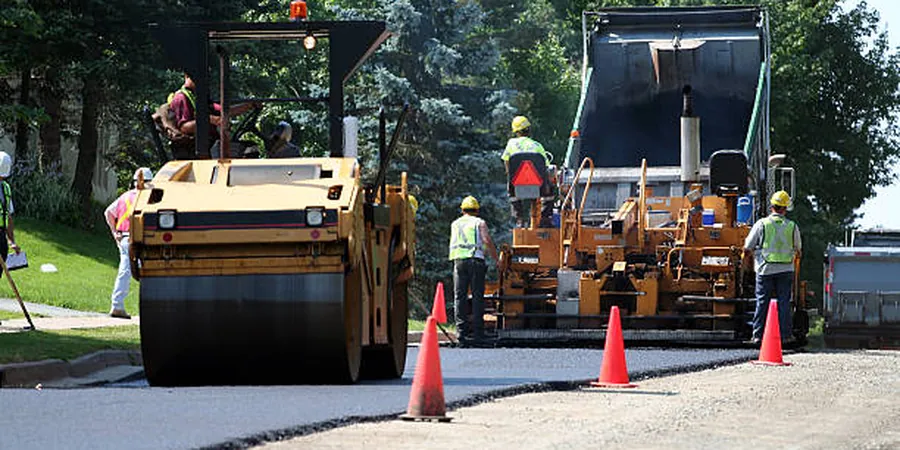
Illustrative image of Pavimento flexible in Calgary
A pavement that survives Calgary's freeze-thaw cycles starts with the subgrade, not the asphalt. We always check the CBR first.

Methodology and scope

We follow AASHTO Guide for Design of Pavement Structures (1993) and the Mechanistic-Empirical Pavement Design Guide (MEPDG) for Calgary's freeze-thaw cycles. The frost penetration here reaches 1.8 m in a severe winter, so we always include a granular base thick enough to protect the subgrade. For low-volume roads, we use the subrasante vial approach to optimize layer thicknesses without overdesign. Our lab runs: Every design gets a structural number (SN) calculation and a fatigue check on the asphalt layer.
Technical reference image — Calgary

Local considerations

Calgary sits on a mix of high‑plasticity clays and glacio‑lacustrine silts. These soils swell when wet and shrink during dry spells. If your flexible pavement design ignores that volume change, you get longitudinal cracking within two years. We've seen it on Deerfoot Trail feeder roads. Another risk is the shallow water table in low‑lying areas like the Bow River valley. Water trapped under the pavement accelerates frost heave and weakens the base. A proper drainage design and a capillary break layer are non‑negotiable. We also model the subgrade modulus seasonally — it drops by 50 % during spring thaw.

Need a geotechnical assessment?

Reply within 24h.

Email: contact@geotechnicalengineering.xyz

Technical parameters

ParameterTypical value
Design methodAASHTO 1993 / MEPDG
Subgrade CBR range2 % (clay) to 15 % (glacial till)
Frost penetration depth1.5 – 2.0 m (design value)
Asphalt binder gradePG 58-28 or PG 64-28
Traffic classAASHTO ESALs up to 10⁷
Base course materialGranular base (25 – 50 mm nominal max size)

Associated technical services

01

Subgrade Investigation

We drill test pits and boreholes to classify the soil, measure moisture content, and run CBR or resilient modulus tests. For Calgary clays we add swell potential tests.

02

Layer Thickness Design

Using AASHTO 1993 or MEPDG, we calculate the required thickness of asphalt, base, and subbase layers. We optimize for local material costs and frost protection.

03

Traffic Load Analysis

We convert your traffic counts into ESALs (equivalent single axle loads). For industrial lots we use higher truck percentages and weigh-in-motion data when available.

04

Drainage & Frost Protection

We design edge drains, permeable bases, and capillary breaks. In Calgary we always check the frost heave potential of the subgrade and specify non‑frost‑susceptible materials.

Applicable standards

AASHTO Guide for Design of Pavement Structures (1993), Mechanistic-Empirical Pavement Design Guide (MEPDG), ASTM D698 (also CFEM Ch 2) (also CFEM Ch 2) (also CFEM Ch 2) (also CFEM Ch 2) (also CFEM Ch 2) / D1557 (Proctor compaction), AASHTO T-307 (Resilient modulus), CSA A23.2-2A (Atterberg limits)

Frequently asked questions

What makes Calgary's subgrade challenging for flexible pavement design?

Calgary has high‑plasticity clays that shrink and swell with moisture changes, plus silty soils that are frost‑susceptible. The subgrade modulus can drop to 30 MPa during spring thaw. We handle that by designing for the weakest seasonal condition and adding a granular base to spread the load.

How much does a flexible pavement design service cost in Calgary?

A typical design for a residential collector road (basic subgrade investigation + thickness design) ranges between CA$2,040 and CA$4,500. For industrial lots with heavy truck traffic and full MEPDG analysis, the cost goes up to CA$8,020. The final price depends on the number of test pits and traffic classes.

Which design method do you recommend for Calgary roads?

For low‑volume roads and subdivisions we use AASHTO 1993 — it's simple and widely accepted by local municipalities. For highways or industrial pavements with heavy loads we use the Mechanistic-Empirical method (MEPDG) because it accounts for Calgary's freeze‑thaw cycles and seasonal modulus changes more accurately.

Location and service area

We serve projects across Calgary.

Location and service area