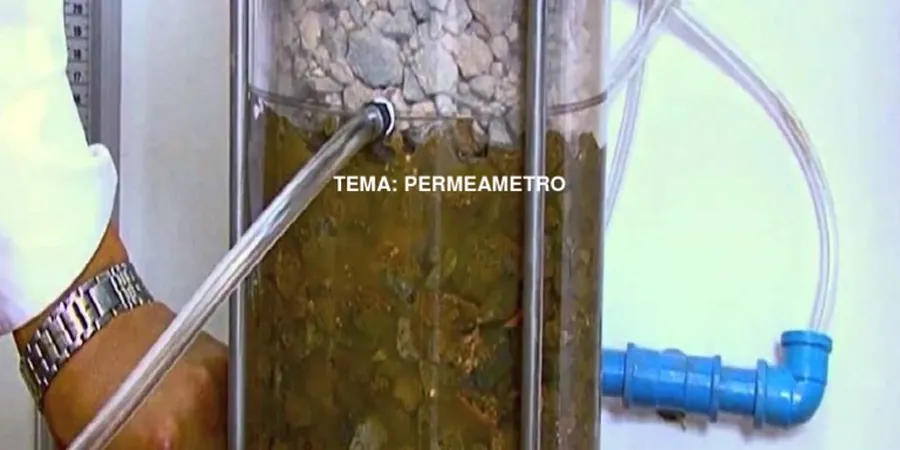
Calgary sits on a complex mix of glacial tills, lacustrine clays, and fluvial deposits from the Bow and Elbow river valleys, creating highly variable permeability conditions within short distances. The shallow groundwater table in many neighborhoods near the Bow River means that even a simple basement excavation can encounter unexpected seepage. A laboratory permeability test (falling/constant head) provides the precise hydraulic conductivity values needed to design effective drainage systems and waterproofing. Before committing to a deep foundation or shoring design, pairing this data with a permeability field test helps validate lab results against real-site conditions. For Calgary's freeze-thaw cycles, knowing how water moves through the soil profile directly influences frost heave mitigation strategies and footing depth recommendations.
A single permeability test can determine whether a weeping tile system is adequate or if a full perimeter drain field is needed — saving thousands in remedial work.
Methodology and scope
Calgary's rapid post-war expansion pushed development onto former lakebeds and glacial outwash plains, where clayey silts and sandy tills alternate unpredictably. A falling head test works best for fine-grained soils typical of the inner city, while constant head suits the coarser alluvial sands found in newer suburbs like Seton and Mahogany. The lab procedure follows ASTM D5084 for flexible-wall permeameters, controlling confining pressure and hydraulic gradient to simulate in-situ stress states. For projects involving expansive clay zones, combining permeability data with Atterberg limits clarifies how moisture fluctuations affect volume change potential. The ISO 17025 accredited facility ensures results are defensible for permit approvals and litigation support, a growing requirement as Calgary's building code updates tighten groundwater management rules.
Technical reference image — Calgary
Local considerations
The permeameter cell itself is a sealed acrylic chamber connected to pressure transducers and graduated burettes — a setup that looks deceptively simple but requires careful saturation and back-pressure control. In Calgary, where glacial till can contain cobbles and gravel lenses, a single test on a disturbed sample may misrepresent field behavior entirely. Using a constant head test on a silty clay because the sample appears sandy could yield a hydraulic conductivity value one or two orders of magnitude off, leading to undersized drainage or overestimated slope stability. The technician must visually classify the soil first, then select the correct method. An experienced lab team validates each result against local borehole logs to avoid costly misinterpretations.
Falling head (ASTM D5084) or Constant head (ASTM D2434)
Soil Types
Fine-grained: falling head; Coarse-grained: constant head
Hydraulic Conductivity Range
1×10⁻⁸ to 1×10⁻² cm/s
Sample Size
2.8 in or 4.0 in diameter, up to 6 in height
Confining Stress
5 to 100 psi (adjustable per project depth)
Reporting Time
5–7 business days for standard samples
Associated technical services
01
Falling Head Permeability Test
Ideal for clayey silts and tills common in Calgary's inner neighborhoods. The test measures how quickly water level drops in a standpipe connected to the sample, providing accurate k-values for low-permeability soils. Used for basement drainage design, landfill liner evaluation, and seepage analysis around deep foundations.
02
Constant Head Permeability Test
Best suited for sandy tills and alluvial deposits found along the Bow River valley and newer subdivisions. A constant hydraulic gradient is maintained while flow rate is measured, yielding reliable results for granular soils. Supports dewatering system design, slope stability assessments, and infiltration gallery sizing.
Applicable standards
ASTM D5084 – Standard Test Methods for Measurement of Hydraulic Conductivity of Saturated Porous Materials Using a Flexible Wall Permeameter, ASTM D2434 – Standard Test Method for Permeability of Granular Soils (Constant Head), NBCC 2020 – National Building Code of Canada, Section 4.1 (Foundation Drainage and Waterproofing)
Frequently asked questions
What is the difference between falling head and constant head permeability tests?
Falling head is used for fine-grained soils (clays, silts) where water moves slowly through the sample. Constant head is for coarse-grained soils (sands, gravels) where flow is steady and measurable. The lab selects the method based on visual soil classification and project requirements per ASTM standards.
How much does a laboratory permeability test cost in Calgary?
The typical range is between CA$540 and CA$990 per sample, depending on the method (falling vs constant head) and whether the sample is undisturbed or remolded. Additional charges may apply for rush turnaround or multiple confining stresses.
How long does it take to get results for a Calgary project?
Standard turnaround is 5 to 7 business days from sample receipt. If the soil is highly plastic or requires extended saturation, testing may take up to 10 days. We can prioritize for time-sensitive construction schedules upon request.
Do I need a permeability test for a residential basement in Calgary?
Yes, if you are building in areas with known high water tables — such as northwest communities like Varsity or along the Elbow River — a permeability test helps size the weeping tile system and sump pit correctly. The NBCC 2020 requires foundation drainage design based on site-specific soil permeability data.