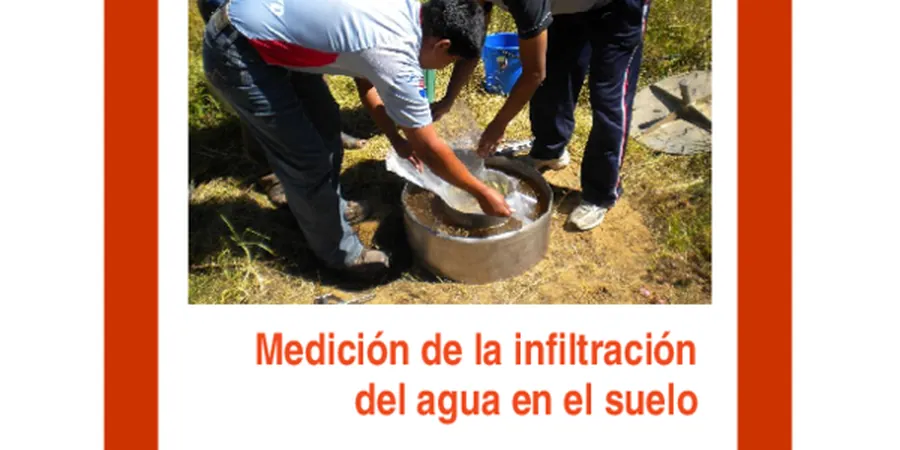
We bring the double-ring infiltrometer to your Calgary site — it’s a simple but solid setup. Two concentric steel rings are driven into the ground, filled with water, and we monitor the drop in head over time. The inner ring measures vertical infiltration; the outer ring prevents lateral divergence. It’s a low-cost, rapid field method that gives you a direct k-value for the vadose zone. We typically run tests at multiple depths to capture layering effects, especially in the saturated clay tills and alluvial sands common across the city. Before setting up rings we always verify site access with a quick density cone and sand replacement test if the surface needs compacting back to spec.
Infiltration rates in Calgary’s glacial till can be 10–100 times lower than in the Bow River alluvium — one test depth is never enough.
Methodology and scope
A residential development in the deep glacial till of Calgary’s northwest quadrant needed drainage design parameters for a stormwater pond. We ran three double-ring tests at 0.5 m, 1.0 m, and 1.5 m depths. The saturated hydraulic conductivity ranged from 5×10⁻⁶ to 2×10⁻⁵ cm/s — typical of the local lodgement till. Those numbers directly informed the pond lining and underdrain spacing. For the same project we also conducted plasticity index testing on the till to confirm its low-shrink swell potential. In the southeast, where the alluvial terraces of the Bow River dominate, infiltration rates can jump by two orders of magnitude. We always cross-check with grain size distribution because the sand content controls the permeability more than anything else in those soils.
Technical reference image — Calgary
Local considerations
Compare the Paskapoo sandstone bedrock along the western edge of Calgary with the clay-rich till in the northeast — the infiltration contrast is massive. In the west, a double-ring test often yields Kₛₐₜ values above 10⁻³ cm/s, while just a few kilometres east the same test in till might barely reach 10⁻⁶ cm/s. Ignoring that spatial variability leads to under-designed drainage or over-designed soakaway pits. If you’re working near Fish Creek or the Elbow River, the presence of sand lenses can create preferred flow paths that a single infiltration test won’t catch. We always recommend a minimum of three test locations per drainage zone to capture that heterogeneity.
Double-ring infiltrometer (ASTM D3385) or Porchet single-ring
Measured parameter
Saturated hydraulic conductivity (Kₛₐₜ) in cm/s
Typical test duration
2–6 hours per depth, depending on soil type
Applicable soil types
Glacial tills, lacustrine clays, alluvial sands, fill material
Reporting
Kₛₐₜ vs depth, infiltration curve, recommendations for drainage design
Standard
ASTM D3385-18 (double-ring); Porchet per local engineering guidelines
Associated technical services
01
Double-Ring Infiltrometer Testing (ASTM D3385)
Standard method for measuring Kₛₐₜ in unsaturated soil. Two concentric rings, constant or falling head, with data logged every minute. Suitable for stormwater infiltration basins and bioretention cells.
02
Porchet (Single-Ring) Infiltration Test
Faster alternative for preliminary assessments. A single steel ring is driven into the ground and the water level drop is recorded. Best used in sandy soils or where multiple test points are needed quickly.
03
Field Permeameter Testing (Guelph Permeameter)
Constant-head borehole test for measuring field-saturated hydraulic conductivity at specific depths. Ideal for layered profiles where you need Kₛₐₜ for each horizon separately.
04
Laboratory Permeability (Falling-Head Test)
On disturbed or intact samples we run falling-head or constant-head permeameter tests per ASTM D5084. This gives you Kₛₐₜ under controlled conditions, useful for cross-referencing field results.
Applicable standards
ASTM D3385-18 (Standard Test Method for Infiltration Rate of Soils in Field Using Double-Ring Infiltrometer), CSA Z768 (Standard Practice for Design and Installation of Groundwater Monitoring Wells) — referenced for borehole preparation, CSA A23.3-19 (Design of Concrete Structures) — when infiltration data feeds foundation drainage design
Frequently asked questions
What is the difference between a Porchet test and a double-ring infiltrometer test?
The Porchet test uses a single ring and measures a combined vertical-lateral infiltration rate, while the double-ring infiltrometer has two concentric rings. The outer ring blocks lateral flow so the inner ring measures purely vertical infiltration. For drainage design in Calgary's glacial tills, the double-ring method is preferred because it isolates vertical Kₛₐₜ, which is the critical parameter for pond sizing and underdrain spacing.
How many infiltration test locations do I need for a stormwater management plan in Calgary?
For a typical residential subdivision in Calgary, we recommend a minimum of three test locations per drainage zone, with at least one test per soil unit identified in the geotechnical investigation. If the site has variable geology — for example, till overlying alluvial sand — we increase the density to one test per 2,000 m². The City of Calgary's Stormwater Management & Design Manual often requires site-specific infiltration data, so we align our test grid with their submittal guidelines.
Can infiltration tests be performed in frozen or saturated ground?
Frozen ground gives artificially low infiltration rates and should be avoided. We wait for the active layer to thaw completely, typically from late April to October in Calgary. Saturated ground — where the water table is within 1 m of the surface — also skews results because the test measures near-saturated flow rather than true infiltration capacity. In those conditions we switch to a falling-head permeameter on intact samples instead.
How much does an infiltration test cost in Calgary?
A standard double-ring infiltrometer test with field report and Kₛₐₜ calculation typically costs between CA$400 and CA$580 per test location, depending on depth, number of depths, and site access. Porchet tests are slightly less, around CA$300 to CA$450 per point. Volume discounts apply if you need 5+ locations. The price includes mobilization within Calgary city limits, ring installation, data logging, and a summary table with recommendations for drainage design.